Can Advantage Arrest be used on a prepared tooth just before restoration cementation?
Yes. As a desensitizer it reduces dentin permeability and is safe on exposed dentin, and studies show it treats softened dentin before direct restorations. Treating with Advantage Arrest 38% first seals tubules and adds the antimicrobial benefits of silver and fluoride.
Is there a caries-prevention benefit to untreated sites elsewhere in the mouth?
Yes. Treating carious areas with 38% acts as a whole-mouth fluoride treatment and can replace sealants in grooves. High-quality randomized trials show a protective effect on untreated teeth and surfaces, because silver gradually leaches from a treated site and helps protect the rest of the mouth.
Can Advantage Arrest be used as a cavity liner?
Yes. There are no head-to-head trials for this use, but it has been used successfully as a liner. Note it will not discolor intact enamel or dentin, but will darken demineralized structure brown/black, which may shadow a restoration.
Can I place a traditional sealant or restoration on top of Advantage Arrest?
Yes; it improves aesthetics and helps arrest remaining decay. After application, dry the surface well, then follow the restorative material’s normal process. Be aware that if there is a light-cure step, the material may blacken during curing.
Does the application technique differ between hypersensitivity relief and caries control?
No excavation, decay removal, or anesthesia is required for either. Clean the area to a dry, plaque-free surface, keep it free of saliva, transfer material from a dappen dish, and allow 30-60 seconds to dry (a weak air stream can speed this). The chemical action begins almost immediately in the softened dentin; darkening develops over 24 hours and may increase over a week. Reapply as needed until arrested.
How often should Advantage Arrest be applied for caries control?
Trials used once- or twice-yearly application, with arrested lesions retreated every 6 months. Many clinicians recall the first patients at 3-6 weeks to evaluate, then set recalls by risk: 3-month intervals for higher-risk patients and 6 months for moderate-to-high-risk patients showing good home care.
Why must it be reapplied every 6 months to a year if no restoration is placed?
Reapplication maintains near-perfect long-term arrest even when a lesion still appears hard and arrested. Over 2-3 years, silver can slowly leach out; if enough leaves the tooth, the lesion could soften again. Covering a treated surface with a restoration holds the product in place so it doesn’t need reapplying.
How long until decay left under Advantage Arrest self-arrests?
It depends on lesion size, roughly 2-6 months. Larger, deeper lesions take longer and carry a higher risk of reaching the pulp and failing.
Does the material separate, and does it need shaking before dispensing?
No shaking is needed. Separation only occurs from light exposure, evaporation, or contamination. As ammonia evaporates, silver crashes out as black flecks over many hours, so it can be dispensed earlier and used later in the day if kept dark. Strong light can cause it to crash within minutes to hours; a significant black build-up must form before it is out of specification.
Will it arrest decay around a crown margin and penetrate the whole margin?
Yes. It arrests secondary decay around restorations including crowns and hardens decayed enamel and dentin, but it won’t increase the strength of crown cement or adhesion. If decay has already compromised the restoration, consider replacing it.
Does arresting a lesion increase the tooth's strength?
Yes. The arrested dentin is harder than healthy dentin.
How can I tell recurrent decay from an Advantage Arrest treatment on a radiograph, since they can look similar?
Watch for changes in the size and shape of the translucency over time, and note that secondary dentin can form. The often-quoted ~97% efficacy is for standalone treatment; sealing it under a restoration will change those numbers (direction unknown). Document the treated site in the chart and monitor for change rather than presence or absence of translucency at any one point.
Why do you recommend specific applicators?
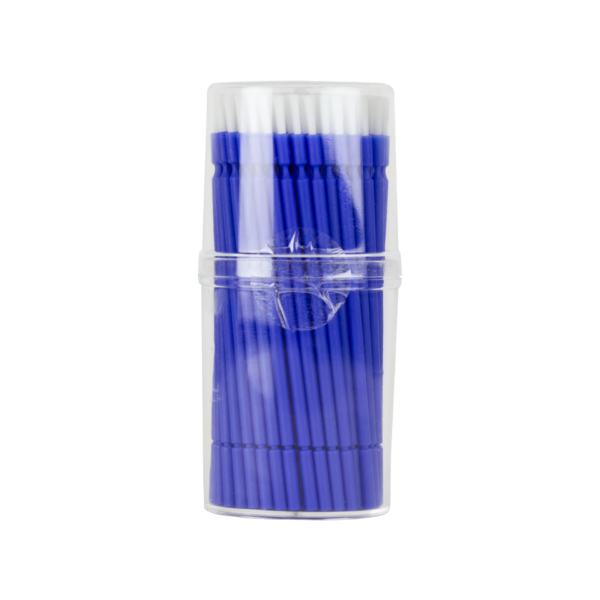
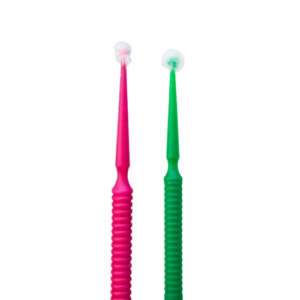
The recommended applicators don’t absorb the product and won’t leave flock fibers on the site. They are ideal when first arresting very deep lesions or when no restoration will be placed on top.
Will moisture affect my application?
Yes. In a non-dried lesion it may not penetrate as deeply and may require a second treatment within a week.
How does an arrested lesion look on radiographs?
Like a scar; you’ll see increasing radio-opacity as the softened dentin mineralizes. The best confirmation of arrest is still the color change and tactile hardness. Educate any referring dentist, since a treated lesion’s appearance may be unfamiliar.
Will Advantage Arrest change the Diagnodent reading?
Yes, it lowers readings, though the timing of the change isn’t certain. Diagnodent detects porphyrins produced by bacteria; since Advantage Arrest kills the bacteria, porphyrins and readings drop. It may not penetrate as deeply in a non-dried lesion and may need a second treatment in 1-2 weeks.
How do I apply it next to gingival tissues and crown margins?
It can be applied near the gingiva with little concern; accidental contact isn’t harmful or caustic and causes temporary staining that fades in a few days. Prolonged liquid contact may cause harmless blanching. Avoid applying near open wounds, stomatitis, or ulcerative gingivitis, where it acts as an irritant. On restoration margins, some surface staining may occur but can be pumiced off.
Does Advantage Arrest work on non-vital or extracted teeth? Does it turn black?
Yes, with the same effect as on vital teeth. In the mouth, color change occurs gradually over 3-5 hours with full darkening within 24 hours; extracted teeth may darken faster depending on light exposure.
Why does it not stain in certain cases?
Staining requires active decalcification with exposed collagen proteins. If there is no exposed collagen, it will not stain. If a surface doesn’t turn black, the silver didn’t bind and the antimicrobial effect will be short-lived.
After a lesion is arrested, do I need to drill off the discoloration before restoring later?
No. You can leave it, remove part, or remove all of it; all options work fine.
Do I need to reapply even if the caries is still dark and hard?
Yes. Reapply every 6 months to a year even if it appears hardened and arrested; long-term success rates are almost perfect with reapplication.
Is Advantage Arrest an irritant to the pulp? Can it be used in very deep lesions near the pulp?
It is an irritant and will likely cause some damage if it directly contacts the pulp, so use it only as an indirect pulp cap, never on exposures. It can be applied very close to the pulp (even 0.1 mm of dentin remaining); silver and fluoride reaching the pulp through dentin are not a problem. The ammonia is the concern, and it evaporates on contact with the tooth. For indirect pulp caps, the high pH promotes secondary dentin formation.
How long does the fluoride and antimicrobial effect last?
About 6 months on a healthy tooth surface, depending on the patient. Silver deposits form silver phosphate, chlorides, and other particulates on the surface and in tubules.
Can it be applied without excavation on a child with a draining abscess?
Yes. As long as the pulp isn’t exposed, it reduces oral bacterial load and can buy time until the teeth can be extracted or treated, though it likely won’t be a long-term fix. Its main value here is helping avoid sedation or general anesthesia in very young patients, with far less risk.
What is the sequence for restorations after application?
Dry the surface well, then follow the restorative material’s recommended process. Watch for blackening during any light-cure step. It is compatible with Fuji IX GP and is in fact recommended as part of the Silver Modified Atraumatic Restorative Technique (SMART).
How close to the pulp can it be applied, and can it go over glass ionomer?
It can be applied very close to the pulp as long as there are no exposures. Over a glass ionomer it protects margins from secondary decay and gives surface staining; under a glass ionomer it provides a strong liner and secondary-decay protection.
Why does it react in a glass dish but not with glass ionomer?
Advantage Arrest is corrosive only in its liquid form. Once applied and dried it is no longer corrosive.
Can it be used over a pulp-capping material?
Not over an exposure. Avoid direct use on exposed pulp.
If two coats give 97% effectiveness, how can you place a filling over it?
The goal isn’t to remove 100% of decay but to stop the disease. A decayed surface returned to function, even without restoration, stops the disease. Leaving treated decay under a restoration leaves some radiolucency, which must be charted and monitored for change over time rather than judged by presence at a single point.
How far into enamel and dentin does it penetrate?
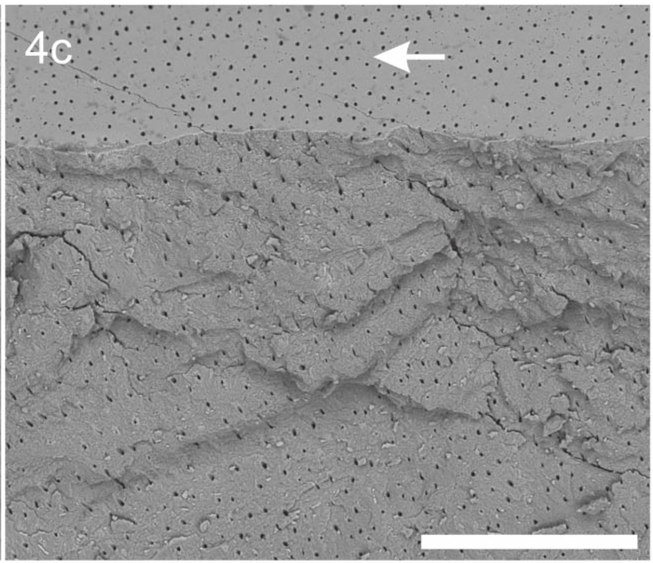
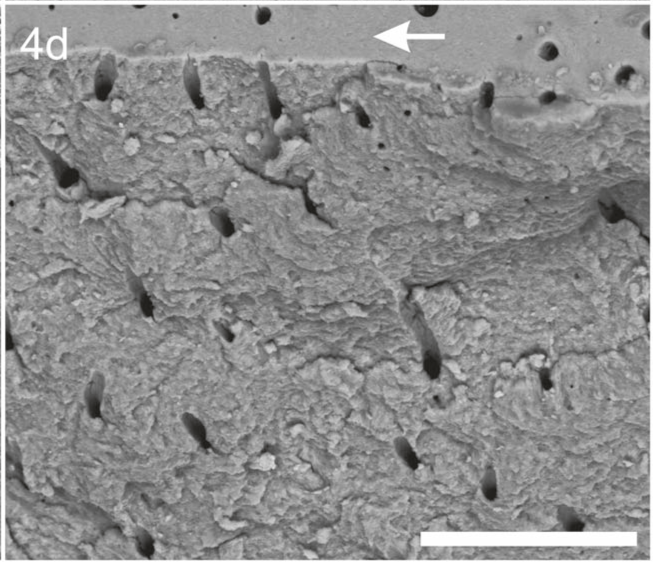
About 25 microns into enamel and 300 microns into dentin, sealing the lesion surface and arresting the remainder. In a 2002 study, 100% of lesions stained black to the outer edge were arrested.
Why doesn't the silver oxidize and turn black on healthy tooth structure?
On healthy surfaces, silver forms silver phosphate on receptor sites plus some chlorides and oxides. The oxides aren’t trapped in a lesion body or bound to proteins (which are covered by hydroxyapatite), so they wash away, leaving silver phosphate bound to exposed phosphate for protection, and calcium fluoride/fluorapatite from the fluoride.
Are the silver and fluoride bound to each other?
No. It is ionic silver and ionic fluoride held in suspension by ammonia. It reacts with the tooth immediately on application, binding to whatever it can, which is why it works so fast.
How many grams of product are in one drop?
About 7.6 mg per drop (a 0.025 ml drop), after accounting for the product’s specific gravity of roughly 1.25-1.26.
What is the pH of Advantage Arrest?
About 10.4.
How can Advantage Arrest be 44,800 ppm fluoride and a 5% NaF varnish only 22,600 ppm at similar percentages?
Fluoride varnish is sodium fluoride, where fluoride is only 45.45% of the weight, so 5% works out to 22,600 ppm F. In Advantage Arrest, the 5% is free ionic fluoride, and adjusting for specific gravity gives 44,800 ppm F.
Does it work by causing secondary dentin to form?
No; that’s not its main mechanism. The fluoride portion does create fluorapatite, but the main hardening effect comes from silver: ionic silver is wicked into the lesion and binds to collagen and phosphate sites, forming silver chlorides, phosphates, and oxides that fill the voids left by lost tooth structure and harden the soft dentin.
Does its antimicrobial action let yeast flourish, and does it affect good bacteria?
It denatures proteins in both bacteria and fungus, so it kills both. As with wiping out any biofilm, whatever opportunistic organism arrives first can regrow. Silver is a broad-spectrum antimicrobial, but activity is essentially limited to the mouth; if it passes into the gut it is diluted far too much to have notable effect, and published research reports no GI side effects.
Does it kill only cariogenic bacteria, or periodontal bacteria too?
As a broad-spectrum antimicrobial, silver is effective against a wide variety of organisms it contacts.
How can it oxidize and react with decay under a filling when there's no oxygen?
There is always some oxygen present, if not enough to sustain aerobic life. The tooth constantly passes fluid through tubules, oxygen can be preferentially bound by various materials, the restoration process itself can introduce oxygen and energy (e.g. light), and glass ionomer restorations are porous and allow some transfer.
What is the recommendation for children under 3?
Its main value in this group is avoiding sedation or general anesthesia. The literature suggests 1-2 drops per 10 kg body weight (same as adults) for children under 3.
How do I apply it on a newly erupted molar?
It benefits the whole mouth, but less than applying to all non-decayed occlusals. If replacing a sealant, apply to all occlusal surfaces needing that benefit; other teeth still receive some benefit.
Are there contraindications for caries control?
Do not place it on exposed pulp. Do not use other topical fluorides (e.g. fluoride varnish) in the same appointment. Studies show 38% conveys more effective protection to other teeth than fluoride varnish, with reduced overall fluoride exposure.
Are there post-appointment instructions for patients or caregivers?
No postoperative limitations. Patients may eat or drink immediately and brush with fluoridated toothpaste on their normal schedule.
What are the safety implications of treating more than six sites in one visit?
The margin of safety for six sites is within 130 times the no-observed-adverse-effect level, so treating more sites has little practical impact on safety. As with fluoride varnish, suspending fluoride supplements for several days is advised. High-caries-risk patients can have up to 5 sites treated per visit, with reapplications more than a week apart.
Can SDF be used on pregnant or breastfeeding women?
There are no demonstrated adverse effects on pregnant or breastfeeding women per current studies, but clinicians should still follow the risk-versus-benefit rule.
Would teeth with hypoplasia turn black?
There may be some blackening, potentially significant, due to exposed collagen and open tubules filling with silver.
Are there interactions with colloidal silver?
Colloidal silver provides far higher silver amounts than an Advantage Arrest application. If the patient continues colloidal silver, it’s sensible to have them stop for a few days after application to be safe, though no issues are anticipated.
Does it increase the chance of fluorosis?
No. Applied roughly every 6 months, Advantage Arrest and fluoride varnishes aren’t notable fluorosis factors; Advantage Arrest has about 1/10th the fluoride of a varnish application. Daily fluoride products and fluoridated water are the notable determinants of fluorosis.
Will it stain clothes, counters, and instruments?
Yes. Protect patients with bibs and glasses; skin and soft-tissue contact isn’t harmful but causes temporary tattooing that appears within hours and fades over 24-72 hours. Use an absorbent, coated-bottom material under the dappen dish. If it contacts instruments or counters, wash immediately with water, soap, ammonia, or iodine tincture then rinse; household bleach can help with difficult stains.
Does application to a lesion cause discoloration, and can the site be restored?
Yes, decayed demineralized sites darken as they arrest, similar to caries arrested by diet changes. Studies show patients view the discoloration as evidence the treatment is working. Treated areas can be restored with glass ionomer or a glass-ionomer/composite sandwich. Do not dilute 38% to reduce discoloration; diluted solutions may not arrest caries. Ionic silver binds tenaciously to denatured (carious) proteins, which is why lesions darken and the antimicrobial effect lasts.
Will it stain areas of recession?
Not if there is no active decalcification and exposed collagen.
Do the Ozone drops do the same thing as Advantage Arrest?
No. Ozone kills bacteria in and around a lesion but does nothing for the tooth’s mineral or structural integrity, relying on slow natural remineralization afterward. Advantage Arrest kills bacteria, binds to tooth proteins, and forms minerals that quickly harden the lesion (48-72 hours), and it contains fluoride for fluorapatite formation. Both arrest the disease, but only Advantage Arrest adds structural integrity.
Should biofilm be removed with an air polisher before application?
Air polishers are designed to clean without abrading the surface; allow to air dry, do not rinse, and avoid blasting with air. Cotton-pellet blotting is fine.
Can it be used under cement for crown placement?
Yes.
Could a radiopaque material be added so treated areas show on radiographs?
It has been considered but is likely not possible. The product is ionic in liquid form and would bind with new additives; blue dye is about all that can be added.
Can Advantage Arrest replace Biodentine?
They are very different products. Advantage Arrest can be tried on resorption to slow or stop progress, but there’s no data and results have been mixed. If nothing else can be done, it’s worth a try.
If a sodium fluoride varnish is done, can Advantage Arrest follow at the same visit?
Avoid any varnish before Advantage Arrest. Always apply Advantage Arrest first, then varnish, or the varnish resin may block Advantage Arrest from entering the tooth.
What are the benefits of using Advantage Arrest?
It is antibacterial, delivers fluoride, desensitizes, and controls caries. Clinically it shifts billing toward recurring disease-arrest treatment, is more conservative, improves patient satisfaction, minimizes or avoids anesthesia, frees chair time, and buys time until definitive treatment.
Is there a benefit to using it on primary teeth where decay clearly reaches the pulp on the radiograph?
As long as the pulp isn’t exposed, it reduces oral bacterial load and can buy time until the teeth can be extracted or treated, though it likely won’t be a long-term fix.
For the restoration protocol, do I rinse after etching?
Complete the application by drying the surface (removing excess) before acid etching, then move to the restorative step. Avoid light cure if possible.
Is it normal for a patient to experience pain?
SDF shouldn’t cause lasting pain unless there is a pulp exposure or other wound. Very short ‘zingers’ of a few seconds are possible as the ammonia evaporates.
Can it be used with an abscess?
It won’t speed abscess resolution but can slow the process. In deep lesions the outer layers arrest while inner layers may progress for months until they either arrest or reach the pulp and abscess.
What happens if SDF gets in a baby's eye?
Use eye protection (even sealing swim goggles). SDF has a pH around 10, so damage can occur; the severity isn’t well documented and is best avoided.
How do I respond to concerns that anaerobic gram-negative bacteria will thrive under sealed SDF-treated decay?
Decades of research (e.g. Edwina Kidd, the Hall Technique, and more recently Rella Christensen) show bacteria may persist under restorations but the decay doesn’t progress once cut off from the oral environment. You never get a sterile environment even after removing all decay, but the lesion stops in most cases; SDF is the belt-and-suspenders method to ensure this.
What glass ionomer is recommended, and how does GI choice relate to decay depth?
The Fuji line of glass ionomer cement restoratives is commonly used. For detailed guidance, refer to the manufacturer’s published clinical resources and courses.
How do I respond to claims that product stability is questionable because early drops contain more fluoride?
The variation in drop size, ppm fluoride, and silver is well within the product’s specification and is effective at all measured points. It confirms the product should be opened, dispensed, and closed tightly for storage, exactly as the instructions state. The tested levels remain about 10-fold below fluoride varnish on toxicity and hundreds of times below EPA limits for silver.
If a crown prep was etched with Crystal, is Crystal needed again at permanent placement in 2 weeks, or can acid etch be used?
Because X-PUR Crystal is a low-pH agent, after removing the provisional, re-cleanse and reapply Crystal to the entire crown surface, then gently air-disperse from 4-5 inches before applying the adhesive luting system.
Could SDF burn?
Nothing is documented. If irritation occurs at one site but not another in the same mouth, the likely cause is an open wound (e.g. ulcerative gingivitis) rather than the product. Post-use sensitivity can also stem from deep caries under a restoration or changes in dentinal-tubule osmotic pressure.
How do I remove SDF stains from hard surfaces?
Nitric acid is the most effective, but it is very corrosive to metals, marble, and skin, so use extreme caution (it’s sold as concrete cleaner at hardware stores). It has been used safely on plastics, formica, corian, and granite. A firearm-cleaning soap that removes lead residue may also help, though its effectiveness for silver is untested.
Are there interactions between SDF and hemostatic retraction cord?
There are no known interactions with the hemostatic agent, but clinicians who tried it stopped, because the cord absorbs and spreads SDF around the tooth and onto the gingiva, leaving temporary black staining. It’s better to use the cord first, remove it, then apply SDF while the tissue is still slightly retracted.
How is SDF more effective than ozone at treating cavities?
Ozone kills bacteria but doesn’t harden residual decay. The claim that lesions must be decontaminated before restoration has been disproven repeatedly (Hall Technique, Kidd, ten Cate, Chu, Knight). You need sound margins, and residual decay will die and arrest. SDF both kills bacteria and hardens residual decay, and penetrates about 2.42 mm into lesions.
Can SDF on primary teeth affect the permanent teeth later?
No. It can be used from the first erupting tooth (2 drops per 10 kg), and no study has shown a deleterious effect on permanent dentition formation.
Why is SDF use limited per appointment?
The 5-sites-per-visit limit stems from the US sensitivity study, which only examined five sites, so that’s what the FDA allowed. From a toxicity standpoint, more extensive applications are safe, and in small children can often be done with 2 drops.
Is there a benefit to placing SDF under a crown without decay present?
Yes, though a similar benefit can be achieved by placing SDF around the margin after seating. With a PFM crown the darkness won’t show through; with zirconia or milled-block crowns the black could be visible, so be cautious for aesthetics. The margin will have a black ring wherever SDF is used.
Could SDF be placed in a high-risk food-trap interproximal area to prevent decay?
Yes. On a healthy surface it provides sealant-like benefits but needs reapplying every 6 months. It won’t stop food trapping but will stop or slow demineralization in those areas.
If SDF is placed and reapplied every 6 months, should fluoride varnish still be applied 4 times a year per the high-risk protocol?
Reapply varnish as a generalized application. SDF does provide a benefit that may equal or exceed varnish for whole-mouth prevention, but there is far more data supporting varnish, so it’s safer to continue the varnish.
I heard a pop when opening the bottle. Is this normal?
Yes. When the bottle is closed tightly and temperature fluctuates, ammonia evaporates and slightly pressurizes the bottle (like a soda bottle), causing a pop. Inverting, shaking, or dried silver in the cap threads can also cause a puff or spray. It means the product was stored properly; keep the cap and threads dry and clean, and store the bottle upright to minimize it.
How do I dispose of expired SDF?
A small amount left in the bottle can go in the trash. If concerned, dispense the liquid onto cardboard in a well-ventilated area, let it dry, and discard. It can also go with office medical waste or to a household chemical/ammonia-product recycling location.
Can SDF be stored overnight in a mobile van in extreme temperatures?
It has been tested stable at 40°C; prolonged heat may shift the blue tint toward purple or red, but it stays active. In cold, as long as it isn’t cloudy or full of black specks, it will be fine.
What is the worst that could happen if SDF is applied very close to or on an exposed pulp?
If it directly contacts the pulp it can irritate, causing pain and swelling; there are no documented cases of necrosis, but it should be avoided. It’s recommended up to and including indirect-pulp-cap depth (the high pH creates secondary dentin, though less than MTA or Portland cement). Only avoid it on an exposed pulp.
Is SDF worth it if it can't be used in very deep lesions?
It can be used in deep lesions. It arrests the outer 2-2.5 mm by hardening denatured proteins and adding silver and fluoride; the deeper portion is cut off from nutrients, and silver kills remaining bacteria, so it usually arrests over months. A small share of near-pulp cases may progress and need restoration, but most arrest. A second application a few weeks later improves arrest depth.
Are there newer studies on SDF in elderly patients?
Yes; a selection of studies and review articles on this topic, including pulp-interaction articles, is available on request through the product’s clinical resources.
How do I measure the right amount with the single-dose gel for children?
You can’t measure an exact amount from the small ampule, but the microbrush applicator controls it naturally by picking up only a small, limited amount, enough to apply safely.
Does the SDF gel work the same as the liquid, and why does it seem to stain less quickly?
Yes, both penetrate lesions equally well (confirmed in lab and clinical studies). The gel may stain more slowly and taste milder, likely because its thicker texture holds the ingredients in place longer.
Can I use nano-silver instead of SDF?
It’s not equivalent. Nano-silver product studies (e.g. Clear Defense) use different fluoride and silver concentrations, so results don’t transfer, and such products are labeled for ages 21+ due to unestablished pediatric safety of nano-silver particles. SDF has an established safety record in adults and children.