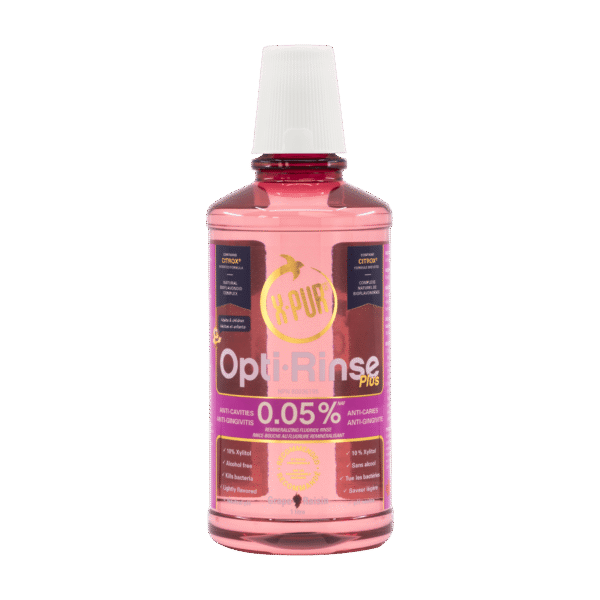
X-PUR Opti-Rinse Plus 0,05% 1 L – Raisin
19,99 $
Rince-bouche au fluorure de sodium 0,05 % pour usage quotidien
Rince-bouche antimicrobien, anti-gingivite et anti-caries
| Quantité | Prix unitaire |
|---|---|
| 1+ | 19,99 $ |
| 3+ | 18,99 $ |
| 6+ | 17,99 $ |
Mécanisme d’action
Une formule brevetée à 4 ingrédients, dont l’efficacité a été scientifiquement prouvée, contenantdu CITROX®, 10 % de xylitol, du chlorure de cétylpyridinium, 0,05 % de fluorure de sodium (225 ppm F) ou 0,2 % de fluorure de sodium (905 ppm F)
CITROX®
Complexe antimicrobien breveté
Ce complexe spécifique de bioflavonoïdes breveté à base de plantes se lie à la paroi cellulaire bactérienne, affectant ainsi les protéines solubles extracellulaires et l’hydrogène nécessaire à la survie des bactéries et virus.

Xylitol
Réduit la charge de bactéries cariogènes
Les bactéries causant la carie dentaire ne sont pas en mesure de métaboliser le xylitol, ce qui cause une absence d’acide lactique et de production de polysaccharides.
Chlorure de cétylpyridinium
Contre la gingivite
Un agent antimicrobien à large spectre qui agit en pénétrant la membrane cellulaire, éliminant ainsi ses composants et causant éventuellement la mort de la cellule.
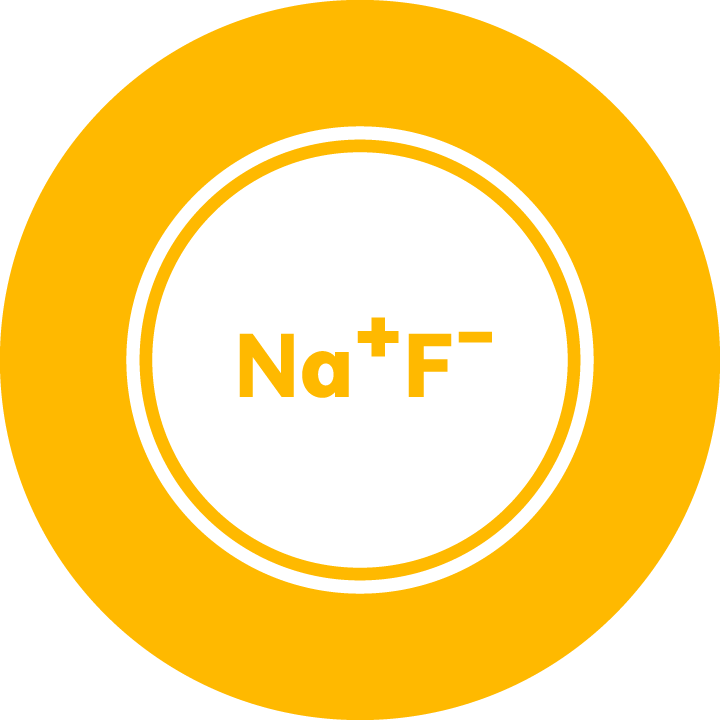
Fluorure de sodium
Favorise la reminéralisation et prévient les caries
L’ion de fluorure se combine avec l’ion de calcium, pour former le fluorure de calcium, et avec l’hydroxyapatite de la dent, ce qui la rend plus résistante à la dissolution par acide.
Indications
Anti-caries
Contribue à prévenir et à réduire
la plaque et la gingivite

Contribue à la
reminéralisation de l’émail
Bénéfices
Prouvé comme ayant un pouvoir antimicrobien équivalent à un rince-bouche à la chlorhexidine, sans les effets secondaires
CITROX® and CPC
Antibactérien, antiviral et antifongique
Anti-caries
Aide à reminéraliser l’émail dentaire
Rince-bouche tout usage efficace et basé sur la science
Sans alcool
pH neutre
Aucun rince-bouche comparable sur le marché
Édulcoré avec 10% de xylitol pour un goût délicieux et rafraîchissant
Formulation brevetée unique avec CITROX® : un complexe antibactérien de bioflavonoïdes
Autres utilisations cliniques
Gériatrie
Orthodontie
Pédiatrie
Bonne hygiène bucco-dentaire
Sensibilité dentaire
Risques élevés de caries
Xérostomie
Mode d’emploi
Adultes et enfants agés de 6 ans et plus
Traitement régulier
Rincer pendant 1 minute avec 10 mL une fois par jour (formulation 0,05%) ou une fois par semaine (formulation 0,2%). Recracher. Ne pas manger, boire ni se rincer la bouche pendant 30 minutes. Les enfants de moins de 6 ans devraient consulter un professionnel dentaire.
Traitement à haute intensité
Utiliser la formulation 0,2% une fois par jour jusqu’à ce que la bouteille soit terminée, pour une durée d’un mois, ou selon la recommandation d’un professionnel dentaire.
Étude
Préparé par: Dennis Cvitkovitch PhD, Professor, Faculty of Dentistry, University of Toronto. 12 septembre 2021.
X-PUR® Opti-Rinse Plus est un bain de bouche préventif, disponible sans ordonnance. Il offre des bienfaits thérapeutiques et doit être reconnu pour son utilisation potentielle en cabinet en tant que bain de bouche pré-interventionnel (PPMR) efficace ; il est recommandé par les professionnels dentaires d’aujourd’hui dans le cadre des soins bucco-dentaires à domicile.
L’Institut de recherche antivirale de l’Université d’État de l’Utah a mené des essais sur le produit X-PUR® Opti-Rinse Plus contre le virus SARS-CoV-2. Les résultats ont confirmé que le X-PUR® Opti-Rinse Plus à 0,2 % et le X-PUR® Opti-Rinse Plus à 0,05 % présentaient tous deux une cytotoxicité vis-à-vis des cellules virales du SARS-CoV-2 et exerçaient une activité virucide, réduisant la charge virale en dessous de la limite de détection après un temps de contact d’une minute (LRV>1,9, >90 %), ce qui équivaut à une réduction de 98,74 %. Cela démontre la capacité deX-PUR® Opti-Rinse Plus à agir comme un PPMR efficace.
D’autres recherches menées à la Faculté de médecine dentaire de l’Université de Toronto avec X-PUR® Opti-Rinse Plus 0,2 % et X-PUR® Opti-Rinse Plus 0,05 % se sont révélés plus efficaces qu’un bain de bouche délivré sur ordonnance contenant 0,12 % de chlorhexidine pour leur capacité à éliminer et/ou à inhiber plusieurs agents pathogènes buccaux, notamment :
- Porphyromonas gingivalis, une bactérie anaérobie protéolytique associée aux maladies parodontales, qui touche principalement les adultes en provoquant la destruction de l’os alvéolaire, entraînant à terme la perte des dents. Il a également été démontré que cette bactérie colonise des organes distaux, notamment le cœur1,2 et le cerveau3, pouvant entraîner des troubles systémiques, notamment des maladies cardiaques et la maladie d’Alzheimer
- Le Streptococcus mutans, bactérie la plus fréquemment associée à l’apparition des caries, prédomine dans les caries infantiles4
- Le Streptococcus sobrinus, un facteur de risque supplémentaire aggravantl’activité carieuse⁴
- Lactobacillus casei, bactérie prédominante dans les caries infantiles6
- Candida albicans, associé de manière significative aux caries de la petite enfance6,7, une comorbidité de l’hyposalivation8, prédominante chez les résidents des établissements de soins de longue durée portant des prothèses dentaires, et constituant un facteur de risque de pneumonie9
Après une exposition d’une minute aux bains de rinçage à pleine concentration, les trois bains ont tous démontré : une réduction de 3 log (soit une élimination de 99,9 %) a été détectée contre P. gingivalis; pour C. albicans, on a observé une réduction d’au moins 4 log (>, soit une élimination de 99,99 %); L. casei a été éliminé avec une efficacit >e de 99,999 % ; pour S. mutans, au moins 99 % des cellules testées ont été éliminées ; quant à S. sobrinus, aucune colonie n’a été détectée avec aucun des bains de bouche pendant la durée d’exposition observée (>une élimination de 99,999 %).
Dans l’environnement naturel de la plaque dentaire, les bactéries se développent sous forme de biofilm adhérant à la surface dentaire. Lorsque les trois bains de rinçage ont été testés sur des cellules se développant au sein d’un biofilm, l’effet le plus marqué a été observé avec P. gingivalis et le traitement par X-PUR® Opti-Rinse Plus à 0,2 %, avec une réduction de 50 % de la biomasse du biofilm après 10 minutes d’exposition. Avec X-PUR® Opti-Rinse Plus à 0,05 %, on a constaté une réduction de 40 % des biofilms, tandis que le bain de bouche à la chlorhexidine n’a permis de réduire les biofilms que de 10 %.
Les bains de bouche X-PUR® Opti-Rinse Plus (0,05 % et 0,2 %) ont fait leurs preuves pour offrir des résultats optimaux.
Références
- Radwan-Oczko M, Jaworski A, Dus I, Plonek T, Szulc M, Kustrzycki W: Porphyromonas gingivalis in periodontal pockets and heart valves. Virulence 2014, 5(4):575-580. PMC4063818 ↩︎
- Deshpande RG, Khan MB, Genco CA: Invasion of aortic and heart endothelial cells by Porphyromonas gingivalis. Infection and immunity 1998, 66(11):5337-5343. PMC108667 ↩︎
- Dominy SS, Lynch C, Ermini F, Benedyk M, Marczyk A, Konradi A, Nguyen M, Haditsch U, Raha D, Griffin C et al: Porphyromonas gingivalis in Alzheimer’s disease brains: Evidence for disease causation and treatment with small-molecule inhibitors. Sci Adv 2019, 5(1):eaau3333. PMC6357742 ↩︎
- Veena RL, Nagarathna C: Correlation of streptococcus mutans and streptococcus sobrinus colonization with and without caries experience in preschool children. Indian J Dent Res 2020, 31(1):73-79. ↩︎
- Reis ACM, Bezerra DDS, Hart-Chu ENS, Stipp RN, Guedes SFF, Neves BG, Rodrigues LKA: Quantification and gene expression of Lactobacillus casei group species associated with dentinal lesions in early childhood caries. Saudi Dent J 2021, 33(2):69-77. PMC7848803 ↩︎
- Sridhar S, Suprabha BS, Shenoy R, Suman E, Rao A: Association of Streptococcus Mutans, Candida Albicans and Oral Health Practices with Activity Status of Caries Lesions Among 5-Year-Old Children with Early Childhood Caries. Oral Health Prev Dent 2020, 18(1):911-919. ↩︎
- Ev LD, Dame-Teixeira N, Do T, Maltz M, Parolo CCF: The role of Candida albicans in root caries biofilms: an RNA-seq analysis. J Appl Oral Sci 2020, 28:e20190578. PMC7185980 ↩︎
- Buranarom N, Komin O, Matangkasombut O: Hyposalivation, oral health, and Candida colonization in independent dentate elders. PloS one 2020, 15(11):e0242832. PMC7688165 ↩︎
- Huang D, Qi M, Hu Y, Yu M, Liang Z: The impact of Candida spp airway colonization on clinical outcomes in patients with ventilator-associated pneumonia: A systematic review and meta-analysis. Am J Infect Control 2020, 48(6):695-701. ↩︎


Produits similaires
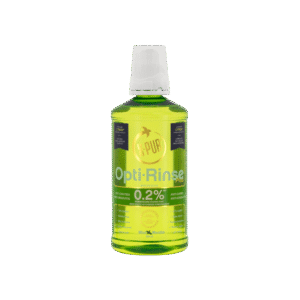
X-PUR Opti-Rinse Plus 0,2% 500 mL – Menthe
Porte-sucettes Curaprox Baby
X-PUR GummiZ au xylitol 75 gélifiés

Nettoyeurs de langue Curaprox CTC 203, lot de 2
Tétine Curaprox Baby, Taille 0
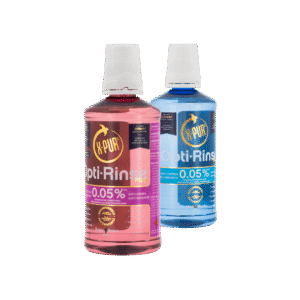
X-PUR Opti-Rinse Plus, 0,05 % de fluorure de sodium 500 mL
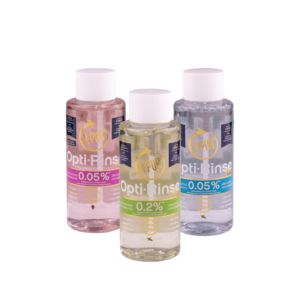
X-PUR Opti-Rinse Plus Échantillon 60 mL
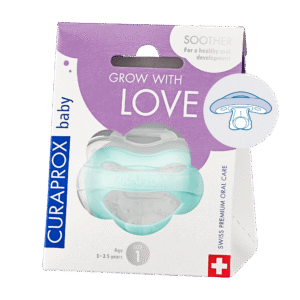
Suce Curaprox Baby, taille 1
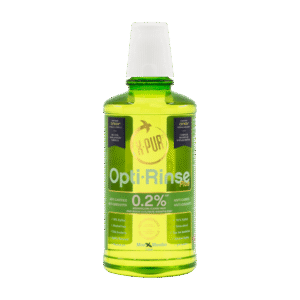
X-PUR Opti-Rinse Plus 0,2% 1 L – Menthe
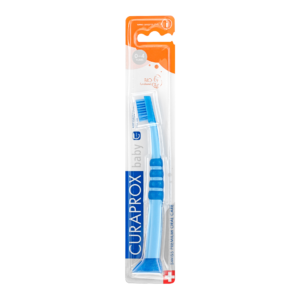
Curaprox Baby
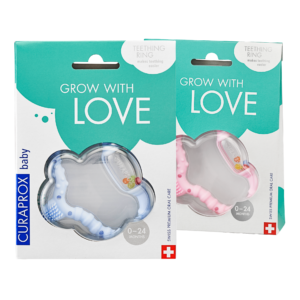
Anneau de dentition Curaprox Baby
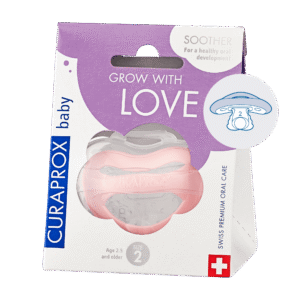
Curaprox Baby Sucette Taille 2
Nos clients nous font confiance
Il n’y a pas encore d’avis.